A weld can be structurally sound and still look terrible. In architectural and food-grade work, appearance is part of the specification, and the finish is set before welding starts.
The finish of a weld starts with fit-up. A tight, clean joint welds faster, distorts less and dresses more easily than a gap that has to be filled.
Heat control is the second half. Too much heat distorts the part and leaves a wide, discoloured weld; too little leaves a cold, proud joint. We size the weld to the section and sequence the welding so the part stays straight; a distorted part has to be straightened, and straightening takes time.
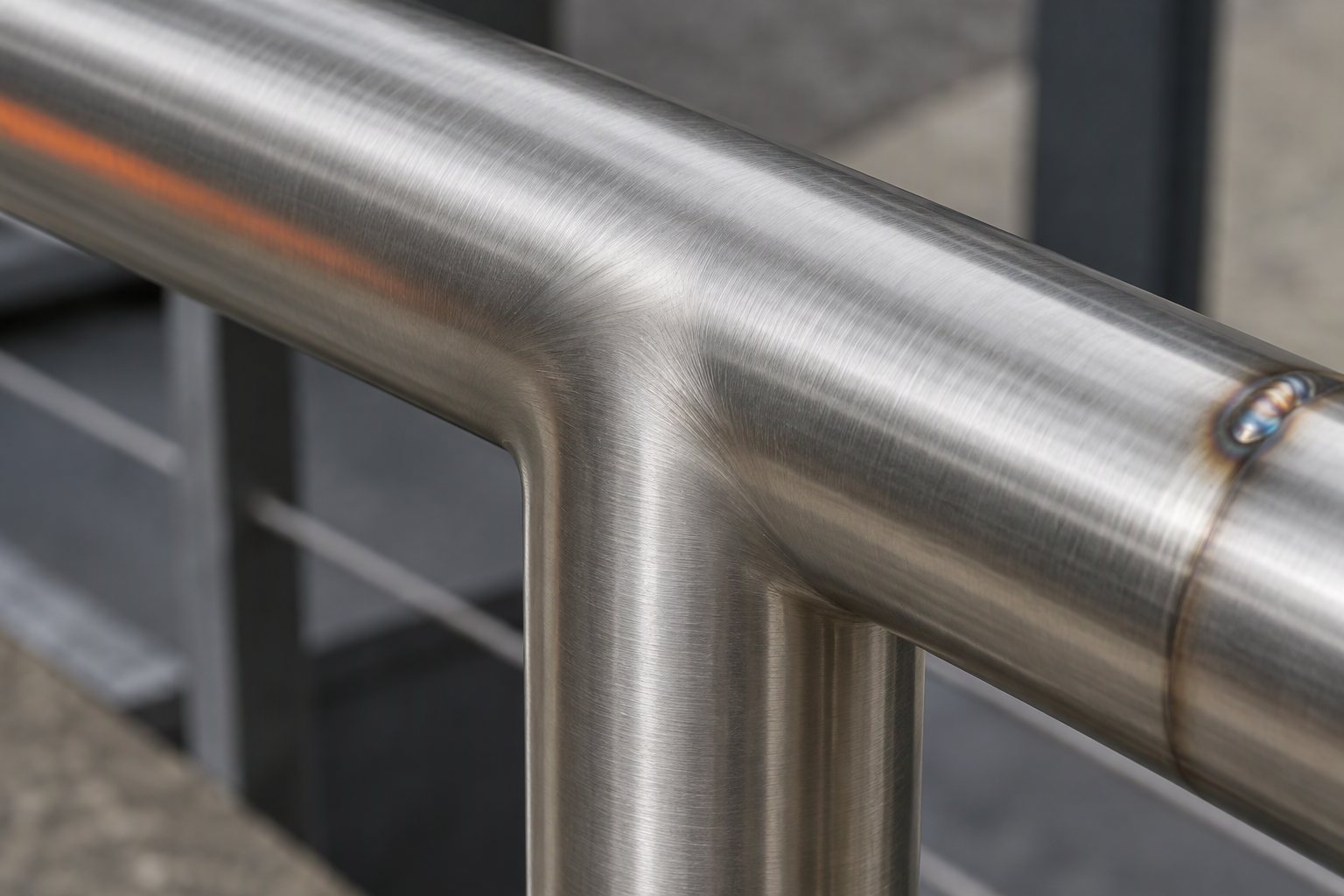
Dressing is the final step: linishing the weld cap flush, blending it into the surrounding material and finishing the grain in one direction. Done properly, the joint is flush and the grain is uniform. Done quickly, the result looks like a polished patch over a rough weld.
The choice is the finish level: structural (strong, visible) or architectural (strong, invisible). That choice should be made on the drawing, because it changes both price and lead time.
What it means for your next order
- Decide on the drawing whether welds are structural or architectural — it changes price and lead time.
- A dressed, blended weld starts with a tight fit-up; a poorly fitted joint cannot be polished to an architectural finish.
- If the part is visible, specify grain direction with the finish.
Questions we ask before quoting
- Are the welds seen or hidden?
- Do they need to be blended invisible?
- Is the finish brushed, satin or mirror?
Ready to start a job?
Send a drawing and we will come back with pricing and a lead time.