A busy distribution warehouse needed guardrails around its loading dock and pedestrian walkways — protection that had to stand up to forklift strikes without shutting the dock for installation.
The challenge
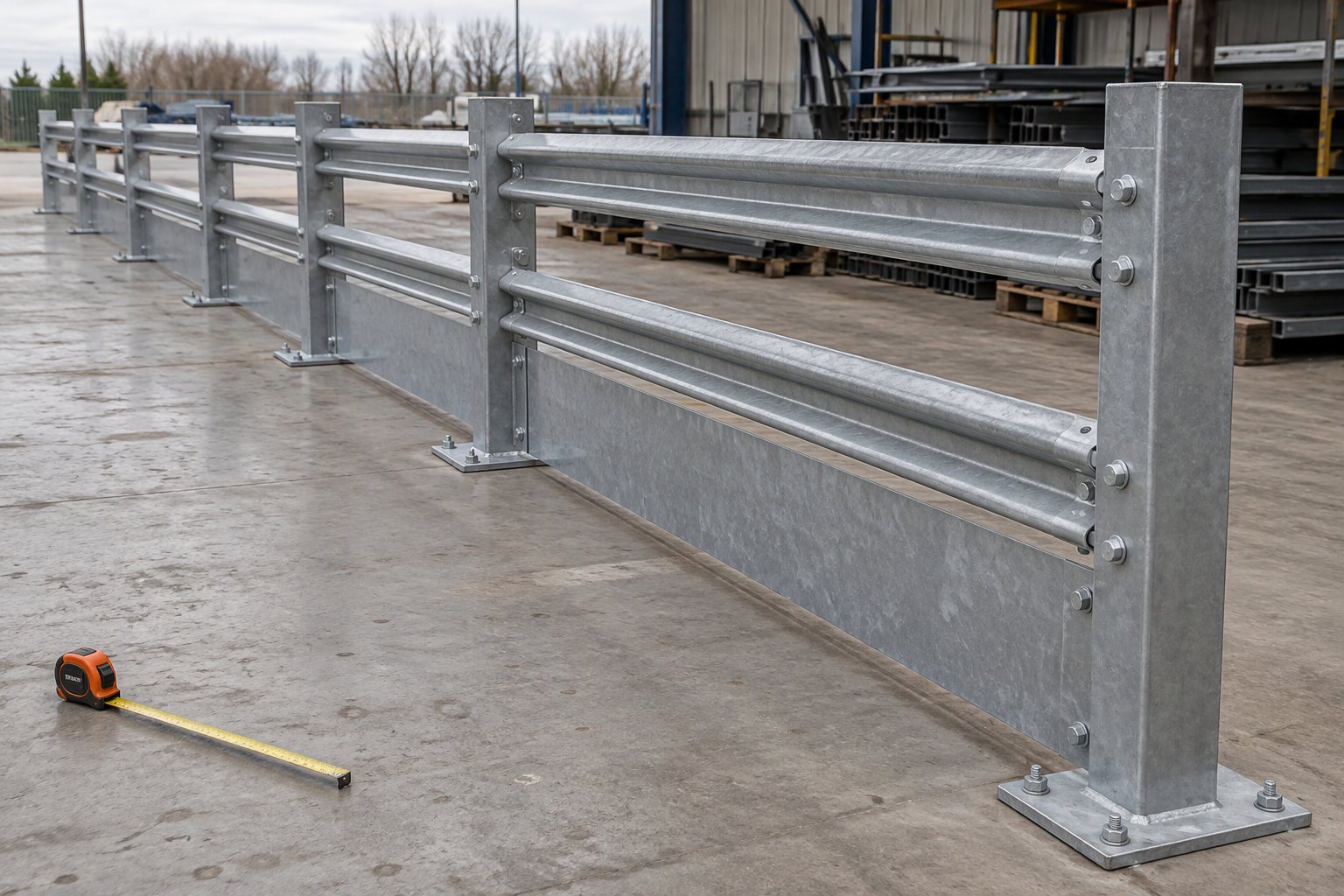
The dock operated two shifts and could not close. The floor was not level, existing fixings were inconsistent, and the rails had to absorb vehicle impact without pulling out of the slab. A standard off-the-shelf rail would have left gaps at the floor and weak points at the joints.
The solution
We measured the dock and walkways before fabrication, recording floor levels and existing fixing points. Baseplates were detailed to sit on the actual surface, with slotted fixings where the slab was uneven. Each rail run was trial-assembled in the workshop, then painted and packed in numbered sections so the site crew could install each run in sequence without cutting.
The result
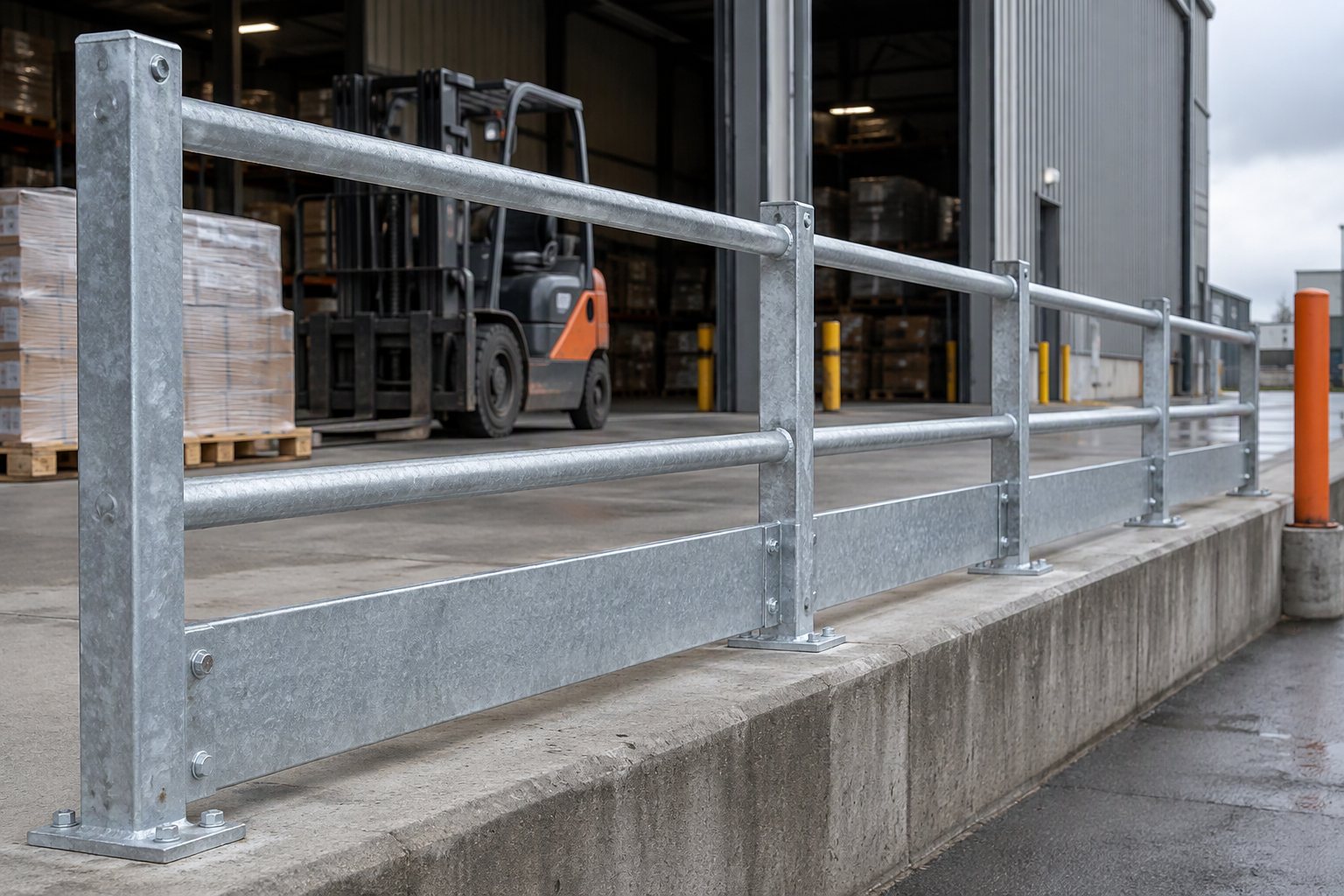
The rails were installed in one weekend, outside operating hours, with no disruption to the dock. Baseplates sat flat on the uneven slab, post spacing matched the site, and the customer gained protection rated for forklift impact.
Key decisions that made it work
- Measured before fabricating: floor levels and existing fixings were recorded, so baseplates sat flat without shims.
- Trial assembly in the workshop: each run was fitted together before paint, so site installation was assembly.
- Staged installation: numbered sections let the crew work run by run while the dock kept operating.
Planning a similar job?
- Book the measurement early so the dock is not closed longer than necessary.
- Ask for numbered, pre-assembled runs; they cut installation time on a live site.
- Specify the finish for impact and abrasion, not just appearance.
Ready to start a job?
Send a drawing and we will come back with pricing and a lead time.